
What to Wear for Autumn Cycling: A UK Cycling Layering Guide
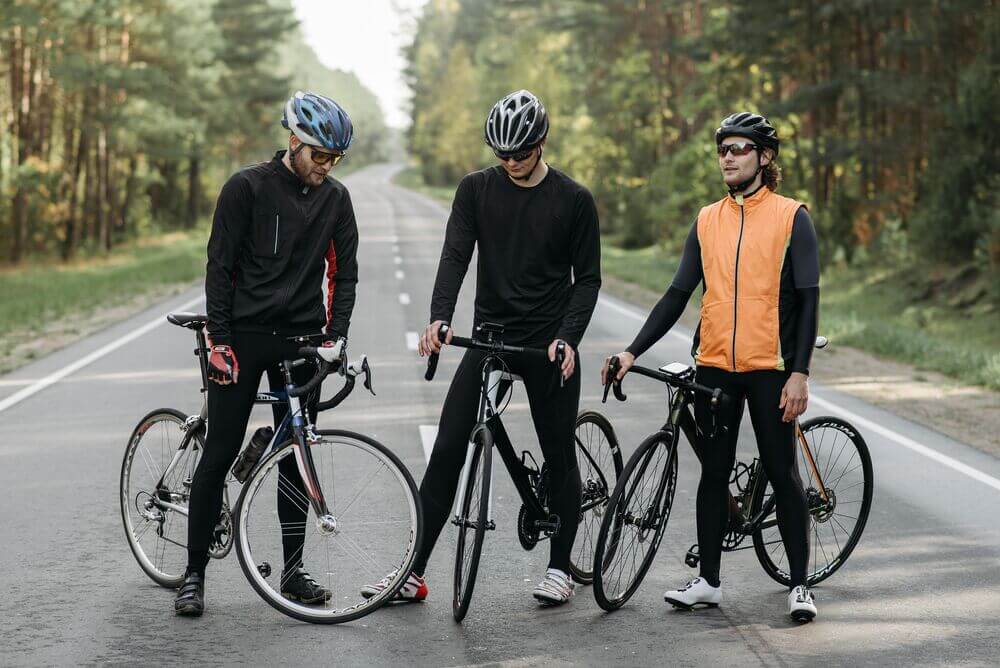
Autumn mornings are freezing, but by 1 pm, you’re sweating. It’s the ultimate British cyclist’s dilemma: you step out the door shivering, then boil halfway through your Sunday club ride. But fear not! With the right autumn cycling clothing combination, you can keep cycling comfortably and easily while enjoying the crisp air and beautiful autumn leaves.
In this guide, we’ve put together a systematic layering approach. We’ve broken down your base, mid, and outer layer autumn cycling clothes, compared fabrics like Merino wool vs synthetic base layers, settled the debate between arm warmers vs a long-sleeve jersey, and provided an essential autumn cycling gear checklist so you never get caught out.
Nigel and Amanda also share expert advice from a pro perspective on tackling autumn riding and dressing for unpredictable UK downpours!
What’s in this guide?:
- How to layer cycling clothing: The base, mid, and outer layers
- The bonus bottom half: Protecting your legs
- Fabric focus: Merino wool vs synthetic
- The power of packability
- The great debate: Long-sleeve jersey vs arm warmers
- What to wear cycling in Autumn: The essentials checklist
- Amanda’s cold-weather insights: Temperature regulation on ascents and descents
- Nigel’s go-to combos for unpredictable UK downpours
How to layer cycling clothing: The base, mid, and outer layers
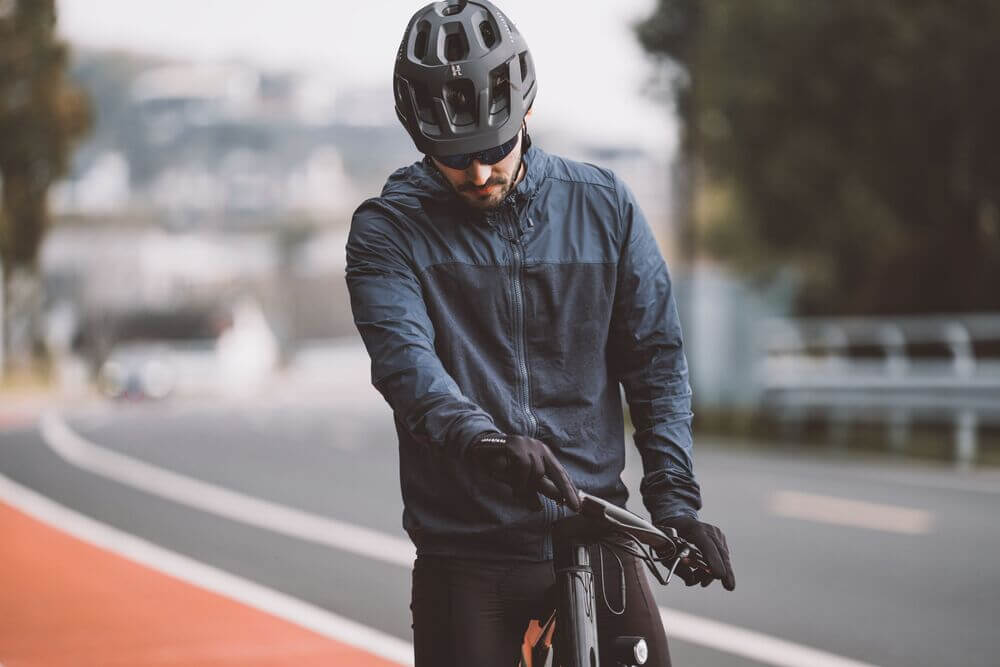
The secret to layering autumn bike clothes isn’t wearing the thickest jacket you can find; it’s choosing interchangeable pieces. To master temperature regulation during autumn, you need to learn how to layer for cycling in our cycling layers guide:
- The base layer: This sits closest to your skin. Its primary job is not to warm you, but to wick sweat away from your body. If sweat sits on your skin, you will start to chill as soon as you start descending.
- The mid layer: This is your main autumn cycling jersey. It insulates by trapping a thin layer of warm air against your body while letting moisture from your base layer pass through.
- The outer layer: This is your shield against the elements. In autumn, this is usually a windproof or water-resistant layer (like a gilet or a packable jacket) that stops the biting wind from stripping away your body heat.
The bonus bottom half: Protecting your legs
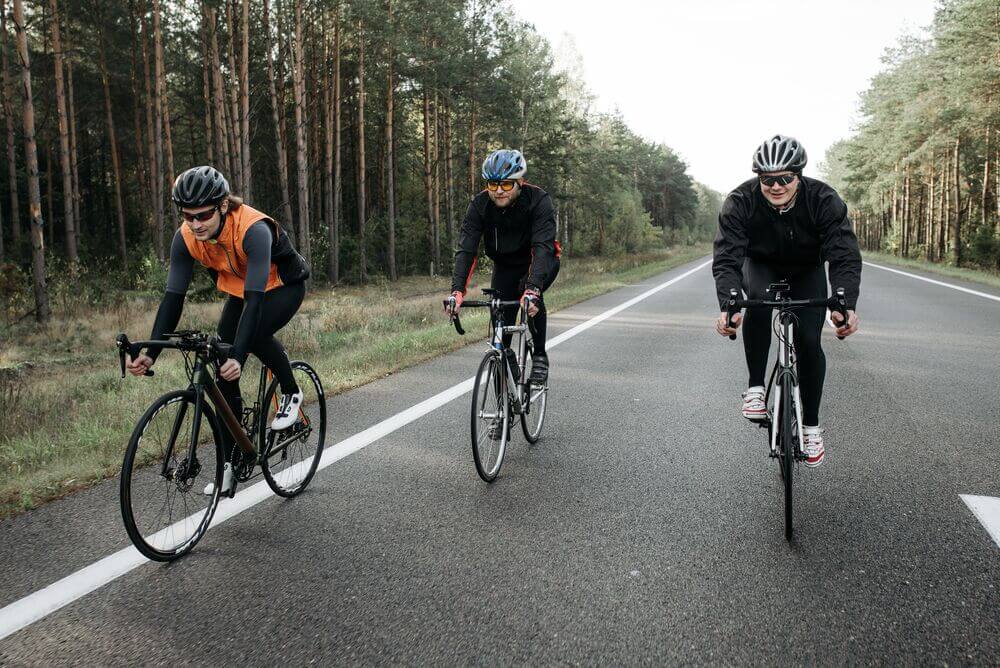
While it’s easy to focus on protecting your core temperature, getting your legwear right in autumn is just as crucial. As with your top half, the key is modularity and the right fabrics. Here are the best options for tackling crisp autumn miles:
Thermal bib tights: If you’re only going to buy one bottom-half piece for autumn, make it thermal bib tights. When that biting morning frost sets in, and the wind picks up, exposed skin is your worst enemy. If you want seamless, slip-free protection without the faff of adjusting leg warmers, a dedicated pair of thermal bib tights is a non-negotiable investment. Full-length coverage protects your vital knee joints and keeps your muscles firing smoothly. Look for tights featuring a brushed “Roubaix” or fleece-lined interior to trap body heat, ideally paired with a DWR (Durable Water Repellent) coating. This essential treatment forces puddle splashes and autumn drizzle to bead right off the fabric, keeping you warm, dry, and comfortable through the most unpredictable British forecasts.
Alternative option: 3/4-length bib tights: A massive favourite among gravel riders, cyclocross racers, and autumn commuters. These tights are cut to end halfway down your calf, permanently covering the knee. They eliminate the hassle of warmers slipping down your thighs while keeping you from overheating, as full-length winter tights might on a mild September afternoon.
Fabric focus: Merino wool vs synthetic
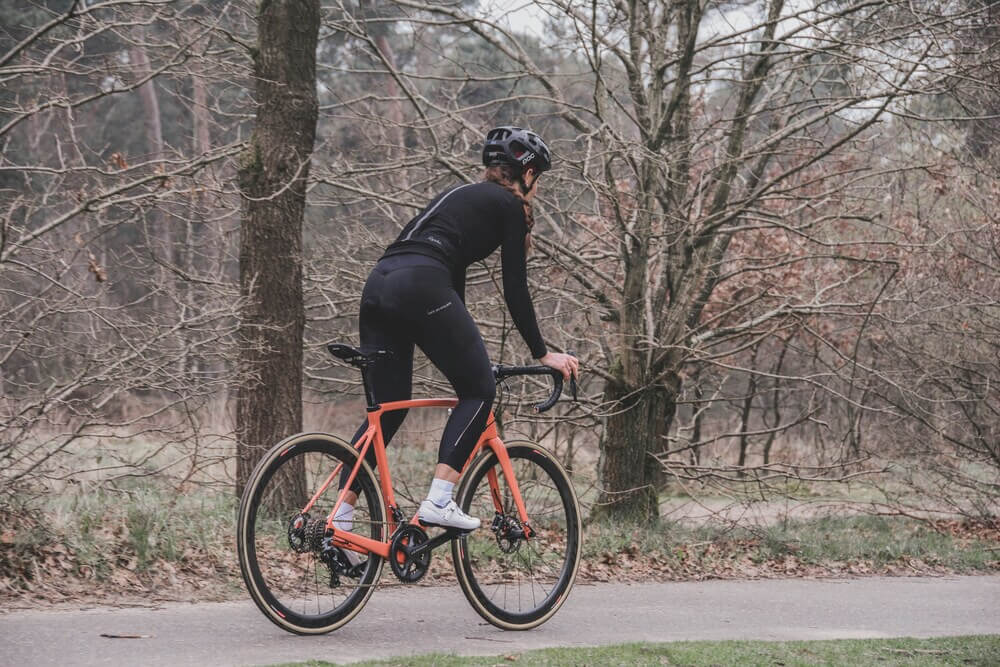
One of the main debates among cyclists when choosing autumn cycling clothing is whether to go with a merino wool base layer vs a synthetic one.
On the one hand, synthetic fabrics (like polyester blends) are fantastic at pulling moisture away from the skin and drying quickly, making them ideal for high-intensity rides where you sweat a lot.
However, Merino wool is nature’s miracle fibre. It regulates temperature beautifully, stays warm even when wet, and is naturally odour-resistant. For long, steady autumn miles, a Merino base layer is often the superior choice.
Synthetic vs merino wool base layer pros & cons: At a glance
| Feature | Synthetic Base Layers (Polyester/Blends) | Merino Wool Base Layers |
| Moisture Wicking | Exceptional. Rapidly pulls sweat away from the skin. | Good. Absorbs moisture but remarkably stays warm even when wet. |
| Drying Time | Ultra-fast. | Slower to dry completely. |
| Insulation & Temp Control | Relies on trapping air. Can feel cold if the wind penetrates. | Naturally thermoregulating. Warms in the cold, breathes in the heat. |
| Odour Resistance | Low. Prone to holding sweat smells after intense rides. | Exceptional. Naturally antibacterial; can be worn multiple times between washes. |
| Durability & Care | Highly durable. Survives regular hot machine washes and heavy abuse. | Delicate. Requires careful washing (low heat) to prevent shrinking or holes. |
| Best For… | Racing, high-intensity intervals, heavy sweaters, and mild-to-warm autumn days. | Long steady miles, bikepacking, stop-start commuting, and deep cold. |

The power of packability
Autumn weather changes by the hour. To stay comfortable from 8 am to 2 pm, packability is key. You want items that can be easily peeled off on the fly and stuffed into a rear jersey pocket without adding bulk. Lightweight windproof gilets and waterproof jackets are absolute lifesavers here. Start the ride fully zipped up in your full layers, and as the sun breaks through the clouds, stow them away to let your body breathe.
The great debate: Long-sleeve jersey vs arm warmers
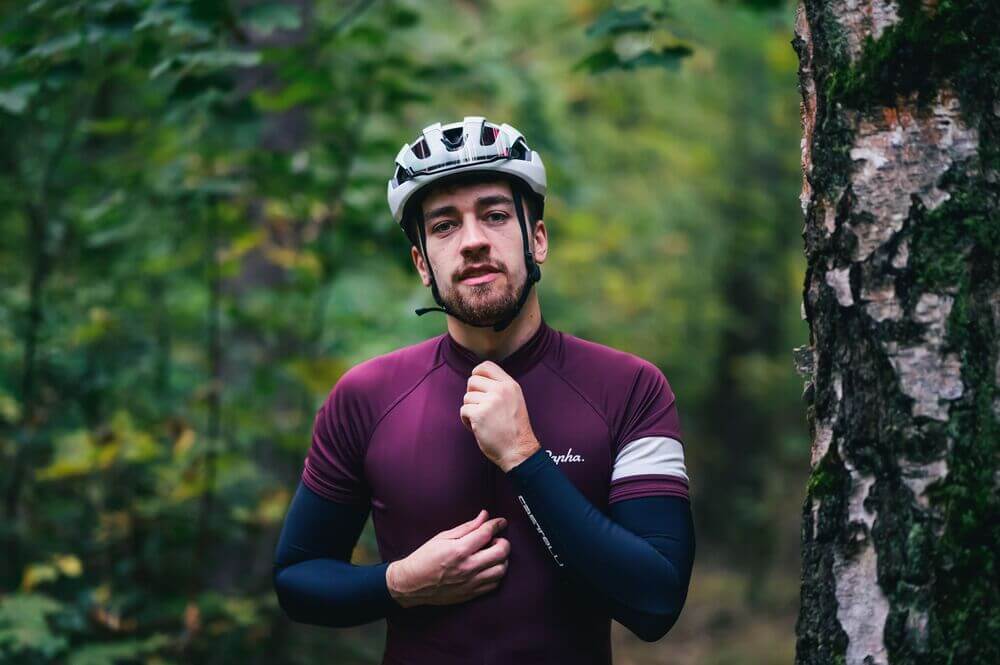
Another hotly contested debate: cycling arm warmers or a long-sleeve jersey in autumn?
While arm warmers are fantastic for taking the edge off a cool summer morning, they lack the sustained protection needed for a chilly British autumn. With temperatures typically hovering between 8°C and 15°C, the long-sleeve jersey is the undisputed champion. A thermal long-sleeve provides consistent, draft-free insulation from collar to cuff, meaning no cold gaps and no faffing with slipping silicone grippers mid-ride.
What to wear cycling in Autumn: The essentials checklist
Now you know how to layer up for cycling and what materials and combinations to look for; you’re almost ready to gear up! Here is our complete checklist of cycling clothing for autumn, from crisp rides to unexpected downpours, so you don’t get caught out.
Autumnal Top Half:
| Your base layer: | Your mid layer: | Your outer layer: |
| Moisture-wicking base layer (Short or long-sleeve, depending on the day’s forecast). | Long-sleeve autumn cycling jersey: For chillier mornings, don’t forget your cycling jersey for that essential thermal insulation. | Windproof gilet: Keeps your vital organs warm while letting your armpits breathe. Or a packable jacket for those wet autumn downpours. |
Autumnal Bottom Half Options:
| Thermal bib tights: Look for “Roubaix” or fleece-lined fabrics, perfect for autumn. | 3/4-length bib tights: Perfect for gravel riders, cyclocross racers, and autumn commuters. |
Essential Autumn Accessories:
| Mid-weight gloves: Full-finger gloves that block the wind without the bulk of deep-winter gloves. | Lightweight overshoes or toe covers: Keep road spray off your toes and block wind chill. | Neck warmer / snood: Essential for stopping cold drafts from going down your jersey. | Cycling sunglasses: Don’t forget your sunglasses in autumn, too, to beat the golden-hour glare. |
Amanda’s cold-weather insights: Temperature regulation on ascents and descents
Amanda, our resident competitive racer, knows a thing or two about pushing pedals when the weather is less than ideal.

When you’re putting in the paces on your autumn rides, the biggest challenge is getting hot on climbs and then chilled on the cold descent. In this case the worst thing you can wear is heavy winter insulation. If you sweat heavily on a climb in a thick winter jacket, that sweat will instantly chill you on the 40mph descent that follows.
Instead, cycling at this time of year requires breathable windproofing. I always wear a highly breathable, moisture-wicking base layer under a lightweight, wind-blocking gilet. Keep your core protected from the wind, but let the heat escape!”
Nigel’s go-to combos for unpredictable UK downpours
Nigel, our endurance specialist and co-founder of Fawkes Cycles, logs miles regardless of the forecast. Here is his strategy for those days when the skies look threatening.
Autumn in the UK means one thing: you will get rained on eventually. But you also don’t want a boil-in-the-bag waterproof jacket for intermittent showers, so it’s all about water-resistant layering.”
My go-to combo for a sketchy forecast is a Merino base layer (because it stays warm when wet), a mid-thermal top (DWR Roubaix fabric), and a gilet. Water beads and rolls off them in a light shower. For heavy downpours, I always carry a descent full waterproof with taped seams in my pocket. Also, don’t forget waterproof overshoes. Once your feet get soaked with freezing puddle water, your ride is effectively over.
For bonus protection, mudguards are also essential in autumn. If you’re constantly being sprayed with cold dirty water from the road, how can you hope to keep dry and warm?”
Ready to upgrade your autumn cycling gear?
Don’t let the changing seasons dictate when and how you ride. Master the layering system and invest in a few versatile pieces, and autumn will quickly become your favourite time of year to get out on the bike.
Whether you need a breathable Merino base layer, a packable gilet, or lifesaving waterproof, Fawkes Cycles has you covered.
Shop our full range of Cycling Clothing at Fawkes Cycles here to build your perfect autumn layering system!
Your next read:
- Autumn Cycling in the UK: How to Prepare Your Body and Bike
- Recommended Winter Cycling Jackets for UK Conditions
- How to Winterproof Your Bike in 6 Steps: Essential Changes for Wet UK Roads

Comments are closed here.